

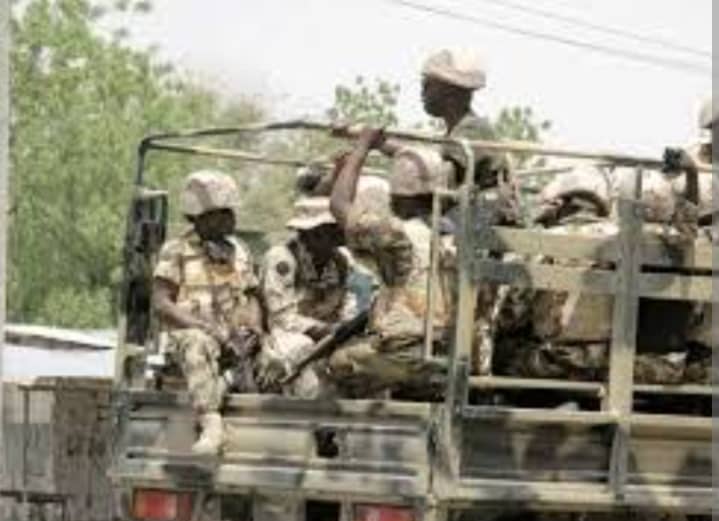
A tragic escalation of violence has left 200 dead as rival jihadist groups clash in Northeast Nigeria, marking one of the bloodiest confrontations in the region in recent years. The fierce fighting reportedly erupted between Boko Haram and Islamic State West Africa Province (ISWAP) militants along the shores of Lake Chad, a zone long plagued by extremist activities. According to intelligence and militia sources, the violent encounter took place in Dogon Chiku, Borno State, and has heightened tension across the Lake Chad area, where both factions continue to battle for dominance.
Reports from The Guadian.ng, The security and local sources revealed that the intense combat between the two jihadist movements stemmed from long-standing ideological and territorial disputes. Babakura Kolo, a member of a civilian militia assisting Nigerian troops in the region, confirmed that around 200 ISWAP fighters were killed in the confrontation. Kolo added that the clashes were particularly brutal, involving heavy weapon exchanges that lasted several hours.
A former Boko Haram fighter, who has since renounced violence but continues to monitor developments in the insurgent landscape, also corroborated the death toll, stating that “around 200 ISWAP fighters were killed, and their weapons were confiscated by Boko Haram.” The ex-fighter, identified only as Saddiku, said that the latest episode might be the worst clash between the rival jihadist groups since their split in 2016. He also noted that Boko Haram lost only four of its members in the bloody encounter.
Security analysts have long warned that internal strife between extremist groups could intensify as both Boko Haram and ISWAP seek control over the Lake Chad basin, a strategic area that links Nigeria with Niger, Chad, and Cameroon. A Nigerian intelligence officer monitoring the conflict confirmed that “more than 150 fighters were killed,” adding that security operatives view the infighting as “good news” since it weakens both groups and reduces their capacity to attack civilians.
The rivalry between Boko Haram and ISWAP began after their ideological fallout in 2016. While Boko Haram’s tactics under late leader Abubakar Shekau were considered too extreme even by ISWAP’s standards, the latter adopted a different operational strategy—targeting mainly military and government installations while seeking to control local communities through taxes and coercion. Despite occasional collaboration, both factions remain bitter enemies, each striving for dominance and legitimacy in the jihadist movement across West Africa.
Meanwhile, insecurity in Nigeria’s northern states continues to worsen. In Zamfara and Sokoto States, farmers have raised fresh concerns about harassment and illegal levies imposed by armed bandits. Residents lament that the growing lawlessness threatens the country’s food supply as many farmers now abandon their farmlands.
According to eyewitness accounts, bandits have introduced what they describe as “harvest taxes,” forcing villagers to pay in cash or agricultural produce before accessing or harvesting their crops. Community leaders in Zamfara’s Tsafe Local Government Area said armed men have mounted checkpoints around villages, collecting levies and punishing those unable to comply. “We are living under a parallel authority,” one farmer lamented. “They tell us when to go to the farm, how much to pay, and even take part of our harvest.”
The increasing activities of both jihadists and bandits have compounded Nigeria’s security crisis, spreading fear and displacement among millions of residents in the North. While the Nigerian military continues its offensive against insurgents, the recent 200 dead as rival jihadist groups clash in Northeast Nigeria serves as a stark reminder of the region’s instability and the far-reaching consequences of prolonged conflict.
[…] Naijanewz.com reported earlier that fighters from the Islamic State-West Africa Province launched a surprise attack using heavy weapons, firing at a convoy of motorcycles carrying troops and members of the Civilian Joint Task Force. The militants reportedly hid along a bushy route and opened fire as soon as the patrol team approached, sparking a fierce gun duel. A military officer, who requested anonymity because he was not authorized to speak on the matter, confirmed that two soldiers and two CJTF members lost their lives in the assault. […]