


A Catholic cleric has publicly criticised Apostle Chibuzor Chinyere, the General Overseer of Omega Power Ministries (OPM), over his decision to arrange a marriage between his adopted autistic son, Aboy, and a single mother. The issue, which has sparked conversations online, was addressed in a detailed Facebook post where the priest also called out a fellow cleric who supported the move.
Reverend Father Chinaka Mbaeri described the action as fundamentally wrong, insisting that even if it was done with good intentions, it cannot be justified. According to him, the situation raises serious concerns about understanding, responsibility, and respect for human dignity.
Priest Challenges Cultural Justifications
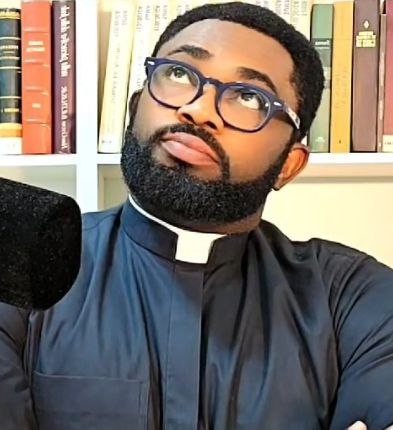
In his March 30 post, Father Chinaka carefully analysed the arguments presented by Reverend Father Fada Basil Ebube Obieje, who had defended the marriage. While acknowledging that some people claim such arrangements are rooted in Igbo tradition, he strongly argued that cultural practices should not be accepted blindly.
He pointed out that the mere existence of a tradition does not make it morally right. In his view, culture should be examined through the lens of truth and ethical reasoning, not the other way around. Accepting every cultural practice without question, he warned, could open the door to justifying actions that are clearly problematic.
Concerns Over Consent and Human Dignity
The priest also tackled the idea that the marriage was necessary because of the young man’s biological urges. He dismissed this reasoning, stressing that marriage should never be reduced to a solution for managing impulses. According to him, such thinking strips the woman of her dignity and reduces her to an object rather than a partner in a meaningful union.
A part of his Facebook post read: “…First, the appeal to culture. “That “in Igbo tradition, families get wives for mentally unstable persons.” But the existence of a practice does not make it right. Not everything cultural is morally acceptable. If we are honest, culture itself must be judged by truth, not the other way round. Otherwise, anything can be justified. “Second, the argument from sexual urge.
“That because the young man has biological urges, a wife should be provided. This is where the reasoning completely breaks down. Human dignity is not protected by outsourcing someone’s impulses to another person. A woman is not a solution to a man’s lack of control. That line of thinking reduces her to an object, not a partner. If a person lacks the capacity for self-regulation, the answer is care, supervision, and responsible support, not marriage
“Third, the claim that the woman “consented.” Really? We need to be honest here. Consent is not just saying yes. Real consent must be free, informed, and not driven by pressure, incentives, or vulnerability. When financial promises and social conditions surround a decision, we must at least question how free that consent truly is.
“And even more importantly, what about the consent of the young man himself? Since he apparently lacks the mental capacity to regulate his actions, how then can he understand, accept, and live out the obligations of marriage? You cannot impose a lifelong covenant on someone who cannot comprehend it.
“Fourth, the attempt to reduce marriage to a “social agreement” because it is not considered a sacrament in that context. Even on a purely human level, marriage is not just a contract for convenience, it carries responsibilities, duties, and expectations that require a minimum level of personal capacity. Remove that, and what remains is not marriage, but arrangement…”
Call for Proper Care Instead of Lifelong Commitments
Father Chinaka further questioned the validity of consent in the situation, noting that true consent must be free, informed, and not influenced by external pressures or incentives. He also raised concerns about whether the young man, given his condition, has the capacity to fully understand and commit to the responsibilities that come with marriage.
The priest emphasized that individuals with such conditions require care, supervision, and structured support systems rather than being placed in lifelong commitments they may not fully comprehend. He maintained that marriage goes beyond a simple agreement and should involve a clear understanding of its responsibilities by both parties involved.