

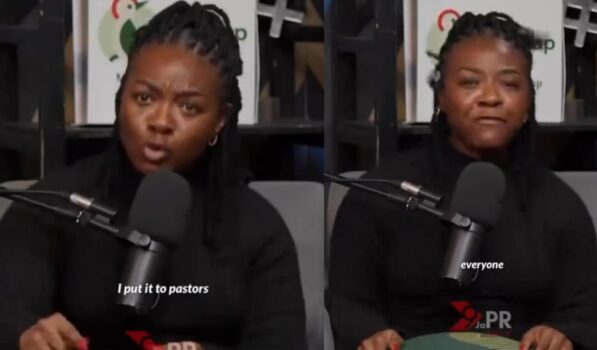
A recent video circulating widely on Twitter has stirred intense debate across Nigeria, as a young woman boldly called on spiritual leaders to take a frontline role in protesting against what she described as poor governance. Speaking during a podcast session, the lady expressed deep frustration over the current state of the nation, highlighting the economic hardship and leadership challenges affecting everyday Nigerians.
Her emotional appeal has since resonated with many citizens who feel similarly disillusioned, turning the clip into a trending topic and sparking conversations about responsibility, leadership, and civic action.
A Direct Call to Pastors and Imams
At the heart of her message was a strong appeal to religious leaders—pastors and imams—to step out of their traditional roles and actively lead protests. According to her, these figures command massive followings and hold moral authority that can unify people across ethnic and social divides.
In her words, she declared:
“Pastors and Imams, come out and let us march the streets of Nigeria. The government are failing, you’re our leaders, march in front. We don’t need celebrities, you’re our celebrities.”
This statement underscores a growing belief among some Nigerians that spiritual leaders are better positioned than entertainers or influencers to mobilize meaningful change.
Comparisons With the Past Raise Questions
The lady also referenced the administration of former President Goodluck Jonathan, recalling how religious leaders were more visibly involved in protests during that period. Her comparison extended to the current government under President Bola Ahmed Tinubu, questioning why similar actions have not been witnessed in recent times.
By asking whether Nigerians are witnessing a “selective attack,” she introduced a controversial angle—suggesting that outrage and activism may not always be consistent, depending on who is in power.
Mixed Reactions Trail Her Statement
Unsurprisingly, her remarks have divided public opinion. While some Nigerians applauded her courage and agreed that religious leaders should use their influence to demand accountability, others argued that mixing religion with political protests could be problematic and potentially destabilizing.
Critics also pointed out that religious institutions are meant to provide spiritual guidance rather than engage directly in political activism, warning that such involvement could blur important boundaries.
A Reflection of Growing Public Frustration
Regardless of where opinions fall, the viral video reflects a deeper, widespread dissatisfaction among Nigerians. Rising economic pressures, governance concerns, and a perceived lack of accountability have pushed many citizens to seek leadership and direction from unconventional sources.
Her message, though controversial, captures the urgency felt by many and raises an important question: in times of national difficulty, who should lead the charge for change?
As discussions continue to unfold, the call for better governance remains at the center of public discourse—louder and more persistent than ever.
Watch the video below: